Nursery · Sleepwear care
A Caregiver’s Guide to Coyuchi Baby Sleep Sacks
A baby sleep sack is a small garment asked to do a practical job: provide a wearable layer while making the nightly business of dressing, settling, and changing a little simpler. Coyuchi’s examples range from smooth organic cotton sateen with a covered zipper to knitted cotton with a button placket. Understanding those differences—and checking the instructions for the exact garment—can help caregivers make a more informed choice.
Published November 23, 2026
There is a familiar quiet choreography to caring for a baby: the soft light, the clean sleeper, the search for the tiny arm that has disappeared into a sleeve. A sleep sack enters this routine as clothing, not bedding in the ordinary sense. It is worn; its shape and openings matter; and its fabric has to be considered alongside the room, the baby’s clothing underneath, and the manufacturer’s instructions.
The term “snuggle sack” appears in the names of several Coyuchi products. The designs are not identical, even when they share an emphasis on organic cotton. One style uses cotton sateen and a front zipper; another is knitted, with ribbed details and buttons. A hooded knit sack is also described in the site’s clothing information. These are differences with everyday consequences: a zipper and a placket ask for different hands, and a smooth woven surface behaves differently from a stretchy knit.
For a caregiver comparing baby sleep sacks, the most useful starting point is not a general promise of softness or sustainability. It is the individual item’s construction, size information, care label, and instructions for use. Materials and certifications can help describe how a textile was made. They cannot tell you whether a particular garment fits a particular baby, or replace safe-sleep guidance from qualified health authorities.
Two cottons, two kinds of construction
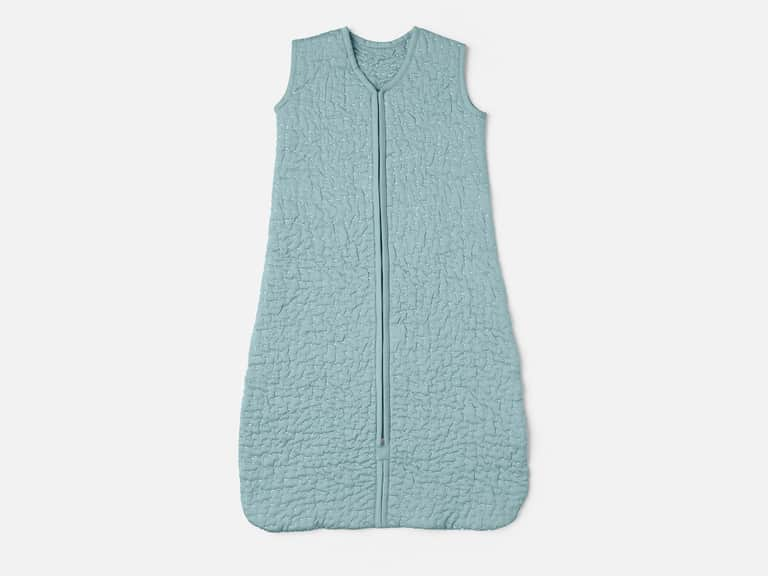
The Pebbled Handstitched Organic Snuggle Sack is described as 100% certified organic cotton sateen, grown and woven in India. Sateen is a woven fabric, generally recognized by a smooth surface and gentle sheen. In this sack, the front zipper is covered, and the garment includes arm openings and a handstitched texture. Those details distinguish it from a blanket: it is shaped to be worn, and its fastening and openings are part of how it is put on and taken off.
The arm openings and covered zipper may be relevant to a caregiver’s changing routine, but a product description is not a substitute for checking how the garment is intended to fit and be used. Read the size and use guidance supplied with the specific item, and examine the zipper, seams, and fabric before each use. If anything is damaged, loose, or no longer fits as intended, pause and consult the manufacturer’s guidance rather than improvising a repair or assuming the garment remains suitable.
The Wren Organic Knit Baby Snuggle Sack offers a different texture and fastening arrangement. Product information describes an undyed knit made from 100% GOTS-certified organic cotton, with a subtle stitch, rib-knit details, a front button placket, and a bottom opening intended to make diaper changes easier. It is listed as machine washable. The button-front construction is distinct from the covered zipper on the Pebbled sack; caregivers should check that closures are intact and follow the instructions for the exact item.
Knitted fabrics can stretch, and their fit may change with wear and laundering. That is not a reason to avoid knitwear; it is a reason to look at the garment as a garment. Check whether the fabric has become elongated, whether the openings remain in their intended shape, and whether the sack still fits according to its size guidance. A cotton label alone does not describe the weight, stretch, or warmth of the finished piece.
Choosing a size: fit before assumptions
When choosing a baby sleep sack, use the manufacturer’s stated sizing information for the specific model. Do not rely on age alone when a size chart provides other measures or fit guidance. Babies grow at different rates, and two garments with similar names may have different dimensions, openings, or intended fits. If measurements are supplied, compare them carefully and contact the manufacturer when the chart is unclear.
A sack should be used only as directed, with the fit and fastening system the manufacturer specifies. Avoid choosing a larger size on the assumption that a baby will grow into it, or making a garment tighter with pins, knots, or other alterations. Similarly, do not assume that a snugger fit is automatically safer. The right approach is to follow the product’s sizing and use instructions, and to seek advice from a pediatric health professional if you have questions about an individual child’s needs.
Product details may list an age range or dimensions, but those figures need context. For example, a size listed for one sack should not be transferred to another style simply because both are cotton or bear the same brand name. The construction can affect how the item sits and how it opens. Check the label and product documentation for the exact version you own, especially if the garment was passed along, purchased second-hand, or has been laundered many times.
Before dressing a baby, inspect the garment in good light. Look over the seams and edges, check that buttons and zipper components are secure, and make sure the closures work smoothly. Feel the inside for rough spots or anything that could irritate skin. This is ordinary garment care, not a technical safety test; where the instructions specify particular checks or restrictions, follow those instructions.
What organic and certification claims tell you
“Organic cotton” describes the fiber claim, while a certification can provide information about standards applied to parts of production. The Wren sack is described as GOTS-certified organic cotton and made in a Fair Trade Certified factory. The Pebbled sack is described as GOTS-certified and Fair Trade Factory Certified. These terms may matter to families considering fiber sourcing and manufacturing standards, but they do not establish that a garment is the correct size, that it suits every baby’s skin, or that it should be used in every sleep setting.
Certification is one piece of a larger picture. It is reasonable to look for clear information about material, origin, care, and construction, and to read what a particular certification covers rather than treating a label as a universal guarantee. Organic cotton is still cotton; a finished textile may have qualities shaped by its weave or knit, processing, seams, dyes, and care over time. If a baby has a known sensitivity or skin condition, a caregiver can discuss fabric choices with a qualified clinician.
It is also useful to distinguish comfort language from instructions. Words such as “soft,” “breathable,” or “cozy” describe a product’s qualities in broad terms; they do not determine how many layers a baby needs or establish a safe room temperature. Avoid using a product description as a substitute for advice on sleep environment, overheating, or safe positioning. For those questions, consult current guidance from recognized pediatric or public-health authorities and follow the directions supplied with the sleepwear.
Closures and the changing routine
Caregivers often notice closures most when time is short. A front zipper can be quick to operate; a button placket has a different rhythm, asking for each button to be fastened and checked. The Pebbled sack’s covered front zipper is described as a feature for access, while Wren’s front placket and bottom opening are described as practical for changes. These design notes can help you anticipate how a garment may fit into a routine, but the manufacturer’s directions determine how it should be put on and worn.
When fastening any sleep sack, take a moment to ensure that the garment is arranged as intended and that no fabric is caught in the closure. Do not leave a fastener partially closed unless the manufacturer specifically instructs you to do so. If a zipper sticks, a button is loose, or the fabric around a closure is torn, stop using the garment until you have checked the manufacturer’s care or repair guidance. A convenient opening is useful only when the fastening remains in sound condition.
There is a small domestic pleasure in a well-designed opening: it saves fumbling, and fumbling is abundant in early parenthood. Still, convenience should not become a reason to overlook fit or care. A sack that closes easily but is the wrong size is not the right choice. Neither is a garment whose condition has deteriorated beyond what its instructions allow.
Washing and preserving the fabric
Care directions vary by product, so begin with the sewn-in label and the product information for the specific sack. The Pebbled Handstitched Organic Snuggle Sack is described as machine washable in cold water on a gentle cycle, with low tumble drying and prompt removal. Wren’s product information also describes machine washing on a cold, gentle cycle and low tumble drying. If the label on your garment differs from a general description, follow the label or ask the manufacturer to clarify.
Before laundering, close the fasteners as directed and check pockets or folds for anything left behind. Wash with like colors when instructed, and avoid adding bleach, fabric softener, or other treatments unless the care label permits them. Such products can affect fibers or finishes, and a baby’s skin may be sensitive to residues. If you are unsure whether a detergent or laundry additive is appropriate, choose a routine consistent with the garment’s care instructions and any advice you have received for your child.
Low heat and prompt removal can help limit unnecessary stress on a textile when those directions are given. Knit garments deserve particular attention because repeated washing and drying may alter their shape. Lay a knit item flat to inspect its dimensions after laundering, and handle it gently rather than pulling it into shape by force. Do not assume that a garment has retained its original fit merely because it looks clean and undamaged.
For a new caregiver, care labels can seem like small print attached to a much larger undertaking. They are more useful when treated as part of the product rather than an afterthought. Keep them legible, retain packaging or instructions that clarify use, and make a note of any special washing requirements. If a label has been removed or is unreadable, consult the manufacturer before guessing.
A practical comparison before purchase
Rather than asking which sack is “best” in the abstract, compare the features that matter in your household. A short checklist can keep the decision grounded:
- Material: Is the fabric woven cotton sateen, knitted cotton, or another construction? What does the label say about fiber content?
- Closure: Does the garment use a covered zipper, buttons, or another fastening? Can you operate it comfortably, and are the components secure?
- Fit: What size range and measurements does the manufacturer provide? Does the guidance match the baby’s current size?
- Care: Is the sack machine washable, and what temperature, cycle, and drying method are specified?
- Condition: Are seams, openings, and fasteners intact? Has the fabric stretched or changed shape?
- Use instructions: What does the manufacturer say about dressing, fit, and use? Are there any restrictions or warnings?
This kind of comparison makes room for practical distinctions without turning a product choice into a contest between materials. Cotton sateen and cotton knit are not interchangeable terms; neither is inherently the right answer for every family. One caregiver may value the feel of a smooth woven surface, another may prefer a knit texture or a particular style of opening. The important thing is to judge the actual garment, its stated use, and the care it will require.
Sleepwear is not a substitute for safe-sleep guidance
A sleep sack is wearable bedding, but the words “sleep sack” do not by themselves settle questions about safe sleep. Follow the product’s specific directions and current recommendations from recognized pediatric and public-health authorities. Use the sleep environment and clothing in accordance with that guidance; do not add loose blankets or modify the garment unless authoritative guidance and the manufacturer’s instructions explicitly support the intended use. If something about a baby’s breathing, temperature, fit, or comfort worries you, ask a pediatric health professional rather than relying on a product description or online generalization.
Caregivers should also pay attention to the child, not only the clothing. A product may be described as breathable or soft, but those words cannot tell you how a particular baby is responding. If the baby seems too warm, uncomfortable, or unwell, address the concern promptly and seek professional advice where appropriate. The sack’s material and construction are part of a broader decision, not a medical assessment.
A small garment, considered carefully
The daily value of a baby sleep sack lies in details that can look modest on a product page: a covered zipper, a button placket, a bottom opening, a wash instruction. Those details shape handling and upkeep. Coyuchi’s cotton examples illustrate why it helps to read beyond the name. The Pebbled sack is described as smooth organic cotton sateen with arm openings and a covered zipper; Wren is described as an organic cotton knit with rib-knit features and a button front. Both have care and sourcing details worth checking, and neither can be assessed by a fiber claim alone.
Choose by the exact product’s size guidance and use instructions. Inspect the garment, maintain it as directed, and reassess its fit and condition as the baby grows. Regard certification as useful information about textile standards, not as a promise about every aspect of use. It is a level-headed way to approach a small but frequently handled part of nursery life: with attention to the material, respect for the label, and the understanding that no garment replaces careful caregiving.
Product and care details can change. Confirm current specifications, sizing, and instructions on the product label and with the manufacturer before use.